
How to send a 1099 to a contractor
Unsure of how to send a 1099 to a contractor? It’s a deceptively complex process, but we break it down for you here.
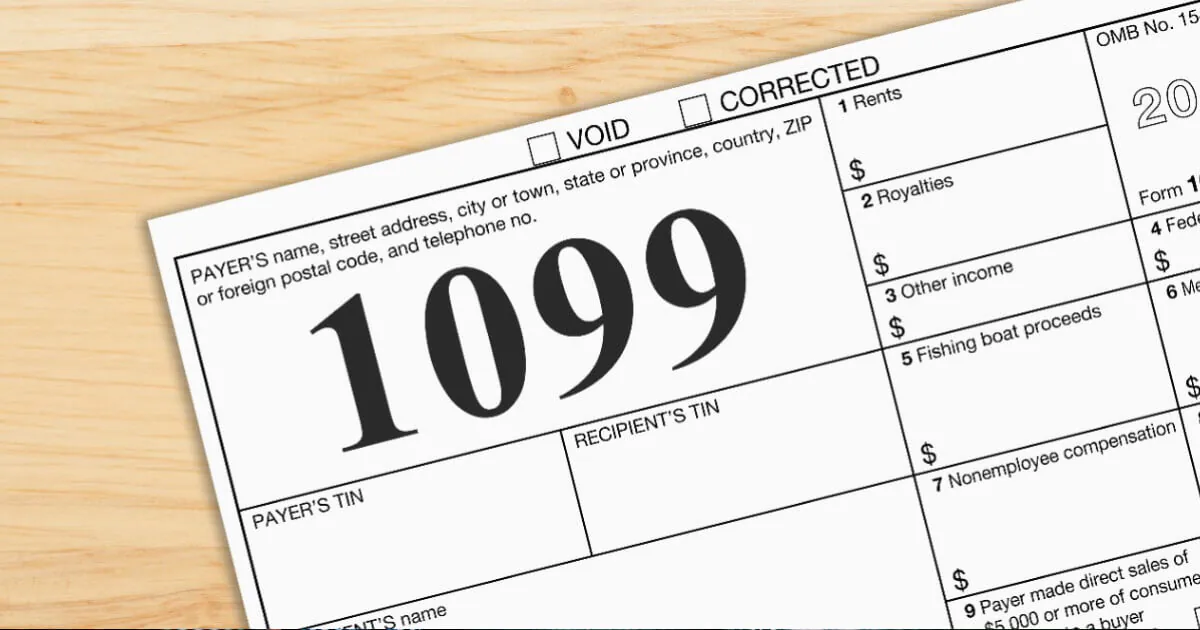

1099 forms are essential legal & compliance forms when hiring an independent contractor as a US-based company. This article details how to send a 1099 to a contractor as well as information for the international variants, including the steps involved, how it varies by country, and some of the best methods on the market today.
When do I need to send a 1099 to a contractor?
The IRS clearly lays out four conditions determining when it is appropriate to send a 1099 to a contractor:
- If the payment is to someone who is not an employee
- If the non-employee provided services in exchange for the payment
- The payment was made to an individual, partnership, estate, or (in specific cases) a corporation
- If the contractor has been paid $600 or more
Common variants of IRS 1099 forms
| 1099-NEC | Payments to independent contractors |
| 1099-MISC | Miscellaneous income |
| 1099-K | Payments received via third-party platforms |
| 1099-INT | Interest income |
| 1099-DIV | Dividends and distributions |
| 1099-B | Income from broker or barter exchanges |
| 1099-R | Retirement account distributions |
| 1099-G | Government payments |
| 1099-C | Canceled debts |
| 1099-Q | Distributions from education savings accounts |
| 1099-S | Proceeds from real estate transactions |
Notably, the type of 1099 used depends on the circumstances of the payment; for example, payments made via credit card require a 1099-K, contractors working for government institutions would receive a 1099-G, while corporations are exempt from 1099 filing, with the exception of attorney fees, medical payments, or rents.
What are the penalties if I’m not sure how to send a 1099 to contractors?
Failing to send a 1099 to a contractor and file it correctly results in significant penalties. To begin, the IRS has a stated penalty for instances of failing to file as well as failing to provide the form to the contractor, issued per individual form.
1099 misfiling: IRS penalties
| ≥30 days | 31- August 1 | August 1 – Not filed | Intentional disregard |
|---|---|---|---|
| $60 | $130 | $330 | $660 |
Beyond this, however, there are several other penalties for US-based companies that either fail to file or file incorrectly, which we have detailed below:
1099 misfiling: Additional penalties
| Name | Description |
|---|---|
| Disallowed Expense Deductions | The IRS’s decision to disallow deductions on expenses filed on your return for contracting services |
| Liability for Unwithheld Taxes | Penalties and fines for any taxes you were required to pay as a result of mishandling a 1042-S, but did not pay, plus penalties and interest. |
| Backup Withholding | An additional cut of the freelancer’s pay is taken by the IRS in the event that they fail to submit a valid Taxpayer Identification Number (TIN) |
| State Penalties | US states have their own due dates, methods to file (although some use the IRS Combined Federal/State Filing program) and penalties for late filing. |
January 31 (1099) and March 15 (1042-S — see section below) are critical dates to maintain compliance; each marks the deadline for filing with the IRS, after which point the penalties in the tables above begin to apply.
What do I send for international contractors?
The short answer is this:
- If the contractor is US-based, they will need a Form 1099.
- If the contractor is based anywhere else, they will need a W-8BEN to confirm their foreign tax status.
Beyond even this distinction, however, there are additional forms required when hiring internationally. If the contractor is working within the US (e.g., foreign consultants who fly in, even for a brief time, contractors working with on-site contracts, videographers who enter the country for a shoot), they will require a 1042-S.
W-8BEN vs Form 1042-S for international contractors
| W-8BEN | 1042-S | |
|---|---|---|
| Use | Certifies that the contractor is not a US citizen, providing the option to claim tax treaty benefits | Reports any US-sourced income to a foreign contractor |
| Use case | Any instance in which a US-based company hires a foreign contractor | Reserved specifically for contractors working within the US |
| Who fills it out and when? | The contractor, prior to any payment | The employer, at year-end |
| Filled with IRS? | No – keep it on file | Yes |
The central consideration between these two is whether or not the contractor performs ANY work in the US. This counts regardless of the duration they are in the country; even something as small as a contractor attending a final review in person would require a 1042-S to be filed for them.
How does the process vary by country?
Filing a W-8BEN/1042-S has several additional layers of bureaucratic red tape that muddle the process. When hiring internationally, companies also need to be aware of any local forms that must also be filed, as well as who they must be filed with and the effects that any specific trade treaties might have on their decision.
The following table outlines just a few examples from prominent freelancing countries:
How to send a 1099 to a contractor by country
| Country | Tax treaty | Local forms | File with |
|---|---|---|---|
| Philippines | 22 USC 1357 | BIR Form 1701 BIR Form 2251Q BIR Form 0605 | Bureau of Internal Revenue (BIR) |
| India | Not since 2018, but negotiations for a new treaty are underway | Form 26Q Form 15CA/15CB ITR-3/ITR 4 | Income Tax Department of India |
| Ukraine | Trade and Investment Cooperation Agreement (TICA) | Form FOP Single Tax Reporting | State Tax Service of Ukraine |
| Nigeria | Trade & Investment Framework Agreements (TIFA) | Self-Assessment Return WHT Form | Federal Inland Revenue Service (FIRS) |
| Estonia | Bilateral Trade Agreement | Annual Income Tax Return (Form A) TSD | Estonian Tax and Customs Board (EMTA) |
What are some common ways to send/manage my forms?
The question of how to send a 1099 to a contractor is, at its core, a question of implementation. Business owners are very rarely filing these forms manually through the IRS; more often than not, they are working through some kind of management platform.
The table below breaks down the four main ways to send a 1099 or W-8BEN to a contractor, evaluating each based on its ability to manage the task.
How to send a 1099 to a contractor: Delivery options
| Features | Automation level (1-10) | Tax form support | Cross-border support | Compliance protections |
|---|---|---|---|---|
| Contractor Management Platforms | 9.8 | ✅ | ✅ | ✅ (Depends on the service provider) |
| Accounting Software | 8.8 | ✅ | ❌ | ✅ |
| Payment Platforms | 7.4 | Limited | ✅ | ❌ |
| Manual filing with the IRS | 4.1 | ❌ | ✅ | ❌ |
Depending on what you might need, one of these options will be a better fit than the others:
| Contractor Management Platforms are widely adopted for managing contractors, providing options to stay compliant, robust automation options, and the ability to automate locally compliant contracts and paperwork for companies considering international hiring. |
| Accounting Software works well for companies hiring US freelancers, but often doesn’t have tools for international hiring, like multi-currency wallets. |
| Payment Platforms aren’t typically designed for compliance, but sometimes provide options for tax filing along with payment services. |
| Manual filing with the IRS works well for small operations with a small number of contractors, since it reduces monthly costs for the employer. |
Are you still unsure how to send a 1099 to a contractor?
For how simple a question it seems, figuring out how to send a 1099 to a contractor the right way is surprisingly difficult. If you have questions about how to implement your own contractor management system, consider speaking with one of our experts for more information, or sign up and try a free demo.
Hire & pay globally with Payoneer Workforce Management
- Expand internationally in 160+ countries
- Run global payroll securely in a few clicks
- Stay compliant with local employment laws
- Let Payoneer Workforce Management manage benefits, work permits, timesheets, and more so you don’t have to


Schedule a demo
Related resources

Leave policy in Costa Rica
A detailed look at annual leave, public holidays, maternity leave, paternity leave, and sick leave entitlements in Costa Rica, and how EOR can simplify them.


Leave policy in Romania
Understand employee leave policy in Romania, including annual leave in Romania, maternity, paternity, and sick leave, and learn how to manage teams compliantly.

Planning to hire employees in Belgium? Here’s a quick guide
Learn how to engage employees in Belgium. Explore working hours, payroll, leave policies, taxes, compliance requirements, and the essentials of the hiring process.

Leave policy in China
A simple guide to leave policies in China, including annual leave, sick leave, maternity leave, paternity leave, public holidays, and other statutory leave entitlements.

Employment laws in Denmark
Understand employment laws in Denmark, including working hours, leave, termination rules, and compliance tips for hiring.
Your guide to payroll in Denmark
A detailed look at Denmark payroll, including pay cycles, salary tax in Denmark, employer taxes, deductions, and payroll compliance. Explore tips for payroll management in Denmark.

Leave policy in Portugal
Learn about the different leave policies entitled to the Portuguese workforce, along with complete compliance with Payoneer Workforce Management.

Leave policy in Vietnam
Learn about leave policies in Vietnam. This guide covers sick days, maternity leave, and public holidays in Vietnam
Planning to hire employees in Denmark? Here’s a quick guide
Learn about employment regulations in Denmark, tax obligations, leave policies, and how Payoneer Workforce Management helps you engage talent compliantly.
Latest articles
-

Leave policy in Costa Rica
A detailed look at annual leave, public holidays, maternity leave, paternity leave, and sick leave entitlements in Costa Rica, and how EOR can simplify them.
-
Leave policy in Romania
Understand employee leave policy in Romania, including annual leave in Romania, maternity, paternity, and sick leave, and learn how to manage teams compliantly.
-
Planning to hire employees in Belgium? Here’s a quick guide
Learn how to engage employees in Belgium. Explore working hours, payroll, leave policies, taxes, compliance requirements, and the essentials of the hiring process.
-
How New Game Studios in the Philippines Manage Revenue Across Global Platforms
This guide explores how game studio CEOs and founders can utilize fragmented income streams from Steam, App Stores, ad networks, and more, while mitigating FX volatility and legacy banking lags.
-
Leave policy in China
A simple guide to leave policies in China, including annual leave, sick leave, maternity leave, paternity leave, public holidays, and other statutory leave entitlements.
-
Employment laws in Denmark
Understand employment laws in Denmark, including working hours, leave, termination rules, and compliance tips for hiring.






Disclaimer
The information in this article/on this page is intended for marketing and informational purposes only and does not constitute legal, financial, tax, or professional advice in any context. Payoneer and Payoneer Workforce Management are not liable for the accuracy, completeness or reliability of the information provided herein. Any opinions expressed are those of the individual author and may not reflect the views of Payoneer or Payoneer Workforce Management. All representations and warranties regarding the information presented are disclaimed. The information in this article/on this page reflects the details available at the time of publication. For the most up-to-date information, please consult a Payoneer and/or Payoneer Workforce Management representative or account executive.
Availability of cards and other products is subject to customer’s eligibility. Not all products are available in all jurisdictions in the same manner. Nothing herein should be understood as solicitation outside the jurisdiction where Payoneer Inc. or its affiliates is licensed to engage in payment services, unless permitted by applicable laws. Depending on or your eligibility, you may be offered the Corporate Purchasing Mastercard, issued by First Century Bank, N.A., under a license by Mastercard® and provided to you by Payoneer Inc., or the Payoneer Business Premium Debit Mastercard®, issued and provided from Ireland by Payoneer Europe Limited under a license by Mastercard®.
Skuad Pte Limited (a Payoneer group company) and its affiliates & subsidiaries provide EoR, AoR, and contractor management services.
